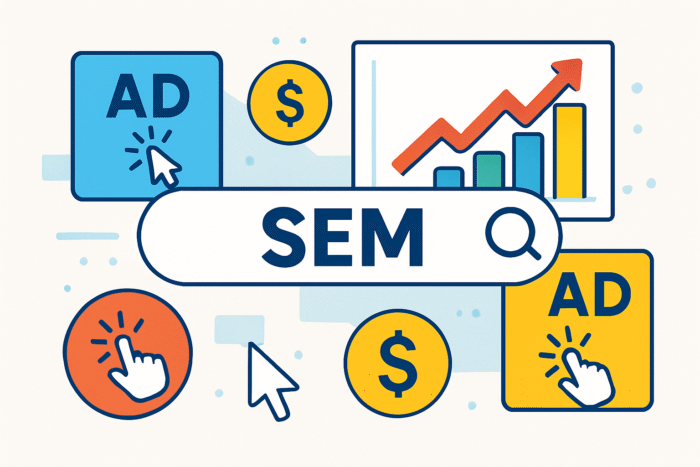
In today’s digital landscape, businesses compete fiercely for online visibility. While organic search results are valuable, they can take months or even years to develop. This is where Search Engine Marketing (SEM) becomes invaluable—offering immediate visibility and measurable results through strategic paid advertising.
What is Search Engine Marketing?
Search Engine Marketing (SEM) is a digital marketing strategy that involves promoting websites by increasing their visibility in search engine results pages (SERPs) through paid advertising. Unlike Search Engine Optimization (SEO), which focuses on organic rankings, SEM uses paid advertisements to appear prominently when users search for relevant keywords.
The most common form of SEM is Pay-Per-Click (PPC) advertising, where advertisers pay each time someone clicks on their ad. Google Ads dominates this space, though Bing Ads and other platforms also offer SEM opportunities.
Why SEM Matters for Your Business
Immediate Results
Unlike SEO strategies that take time to show results, SEM campaigns can drive traffic to your website within hours of launch. This makes it perfect for product launches, seasonal promotions, or when you need quick market penetration.
Precise Targeting
SEM platforms offer sophisticated targeting options, allowing you to reach specific demographics, geographic locations, device types, and even users who have previously visited your website. This precision ensures your advertising budget reaches the most relevant audience.
Measurable ROI
Every aspect of SEM campaigns can be tracked and measured. From impressions and clicks to conversions and revenue, you can see exactly how your investment translates into business results.
Competitive Advantage
Even if competitors rank higher organically, strategic SEM campaigns can help you capture market share and appear above them in search results.
Key Components of Successful SEM Campaigns
Keyword Research and Selection
The foundation of any successful SEM campaign lies in thorough keyword research. This involves identifying the terms your target audience uses when searching for products or services like yours. Tools like Google Keyword Planner, SEMrush, and Ahrefs can help identify high-volume, relevant keywords with reasonable competition levels.
Consider different types of keywords:
- Broad match keywords for maximum reach
- Phrase match keywords for moderate control
- Exact match keywords for precise targeting
- Negative keywords to exclude irrelevant searches
Compelling Ad Copy
Your ad copy must capture attention within the limited character constraints while clearly communicating your value proposition. Effective ads typically include the target keyword, a clear benefit or unique selling point, and a strong call-to-action. Testing different variations helps identify what resonates best with your audience.
Landing Page Optimization
The page users land on after clicking your ad significantly impacts campaign success. Landing pages should be relevant to the ad content, load quickly, and guide visitors toward your desired action. A seamless transition from ad to landing page improves both user experience and Quality Score.
Bid Management
SEM platforms use auction systems where advertisers compete for ad placements. Effective bid management involves finding the balance between cost and visibility, adjusting bids based on keyword performance, time of day, device type, and geographic location.
Quality Score Optimization
Google Ads uses Quality Score to determine ad rankings and costs. This metric considers ad relevance, expected click-through rate, and landing page experience. Higher Quality Scores lead to better ad positions and lower costs per click.
Popular SEM Platforms
Google Ads
As the dominant search engine, Google Ads offers the largest audience reach. The platform provides various campaign types including Search, Display, Shopping, and Video ads, each serving different marketing objectives.
Microsoft Advertising (Bing Ads)
While smaller than Google, Bing captures about 6% of search market share and often provides lower competition and costs. The demographic tends to skew older and more affluent, making it valuable for certain industries.
Amazon Advertising
For e-commerce businesses, Amazon’s advertising platform allows products to appear in search results on the world’s largest online marketplace, capturing users with high purchase intent.
SEM Best Practices
Start with Clear Objectives
Define what you want to achieve through SEM. Whether it’s increasing website traffic, generating leads, or driving sales, clear objectives guide strategy and measurement approaches.
Implement Proper Tracking
Set up conversion tracking to measure campaign effectiveness. Google Analytics, combined with platform-specific tracking pixels, provides comprehensive insights into user behavior and campaign performance.
Test Continuously
SEM success comes through constant testing and optimization. Regularly test different ad copy variations, keywords, bidding strategies, and landing pages to improve performance over time.
Monitor and Adjust Regularly
SEM campaigns require ongoing attention. Market conditions, competition, and user behavior change constantly, requiring regular campaign adjustments to maintain optimal performance.
Focus on Mobile Experience
With mobile searches continuing to grow, ensure your ads and landing pages provide excellent mobile experiences. Mobile-specific ad extensions and responsive design are essential.
Common SEM Mistakes to Avoid
Many businesses make costly errors in their SEM efforts. Avoid bidding on overly broad keywords that attract irrelevant traffic, neglecting negative keywords that filter out unqualified clicks, and sending all traffic to generic homepages instead of relevant landing pages.
Don’t ignore Quality Score factors, as poor scores increase costs and reduce ad visibility. Similarly, failing to track conversions makes it impossible to measure true campaign success and optimize effectively.
Measuring SEM Success
Track key performance indicators that align with your business objectives. Click-through rate (CTR) indicates ad relevance and appeal, while conversion rate shows how effectively traffic turns into desired actions. Cost per acquisition (CPA) measures the efficiency of your advertising spend, and return on ad spend (ROAS) demonstrates overall campaign profitability.
Monitor Quality Score trends to ensure long-term account health and sustainable costs. Regular performance analysis helps identify optimization opportunities and guides strategic decisions.
The Future of SEM
Search engine marketing continues evolving with advancing technology. Machine learning and artificial intelligence increasingly automate bid management and ad optimization. Voice search growth requires consideration of conversational keywords and local search optimization.
Privacy changes and cookie deprecation are reshaping audience targeting approaches, while visual search capabilities create new advertising opportunities. Staying current with these developments ensures your SEM strategy remains effective.
Getting Started with SEM
Begin your SEM journey by clearly defining your goals and target audience. Conduct thorough keyword research to identify opportunities, then create compelling ads that speak directly to user intent. Start with small budgets to test effectiveness before scaling successful campaigns.
Consider working with experienced SEM professionals or agencies if you lack internal expertise. The complexity of modern SEM platforms often justifies professional management, especially for larger advertising budgets.
Conclusion
Search Engine Marketing offers powerful opportunities to drive immediate, measurable results for businesses of all sizes. Success requires strategic planning, continuous optimization, and staying current with platform changes and best practices.
When executed properly, SEM provides valuable traffic, leads, and sales while offering complete transparency into campaign performance. The key lies in approaching SEM as an ongoing process rather than a set-and-forget tactic, consistently refining your approach based on data and market conditions.
Whether you’re launching a new business, promoting a specific product, or competing in a crowded market, SEM can be a game-changing component of your digital marketing strategy. Start with clear objectives, focus on relevance and user experience, and let data guide your optimization efforts for the best results.